N
E
X
T
→
Lexio Collaboration
Introduction
Lexio is our industry-leading data storytelling product. In 2020, we
launched the product with the best technology but didn't answer the
key question "what is the value we can provide to the user."
Starting from user research I came up with a strategic plan and
designed new functions to help users to understand the story behind
data and empower them to take action. The project tripled customer
retention and helped us scale to more organizations.
Team
Yuanyuan Hu - Design Lead
Faye Sun - User Researcher
Adam Babin - Product Designer

Image: project timeline
Background
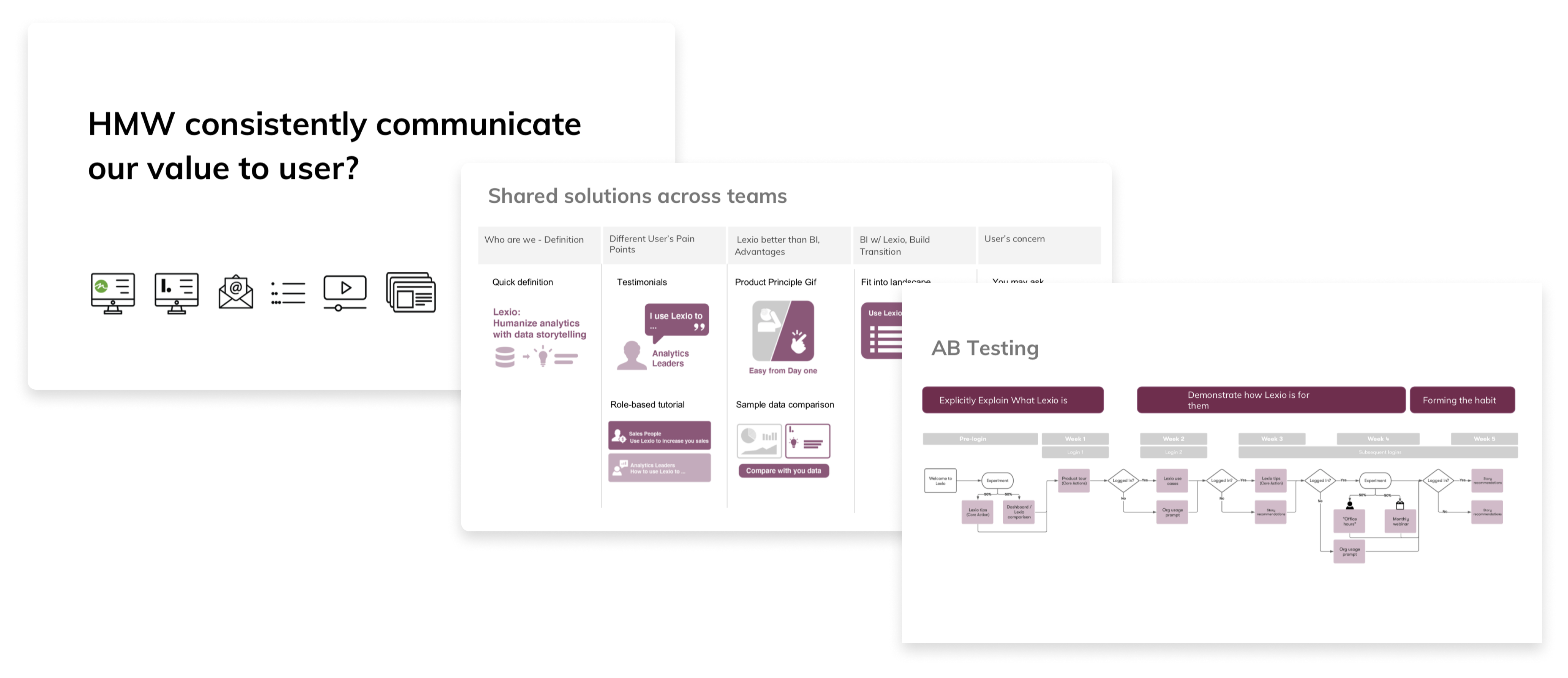
Challenge of growth and retention
With the mission of humanizing data analytics, we decided to use
language as the media to communicate insights. That means we are very
different from our competitors. How can we better communicate our
product and bring unique value to the teams is a big opportunity and
challenge for our retention and growth. The solution I designed directly
contributes to the weekly retention rate and leads to long-term
contracts.
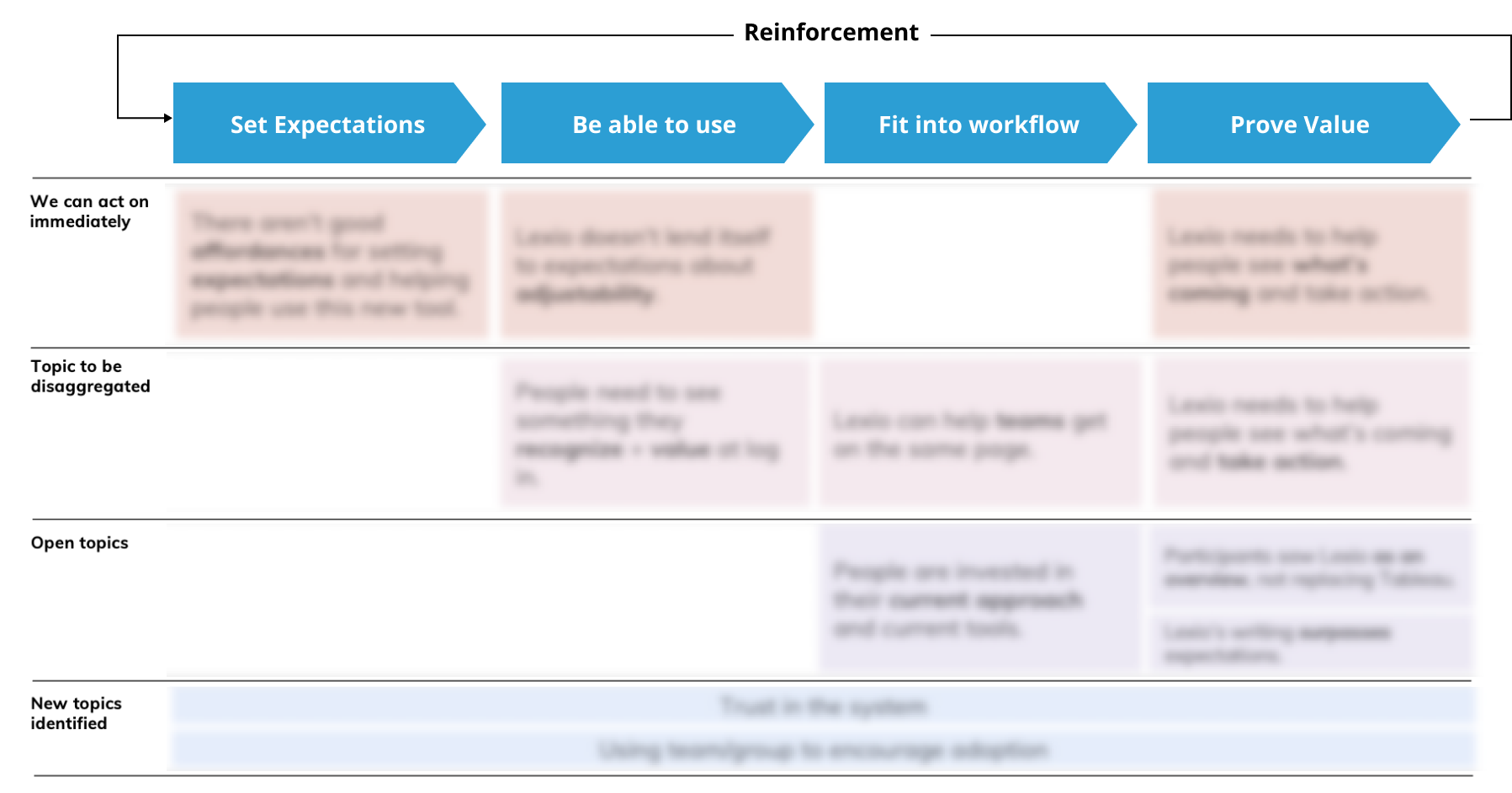
Image: synthesized onboarding barriers and identified action items
Opportunity
Dashboards have been criticized for not being actionable, then what
are the action users wanted to take?
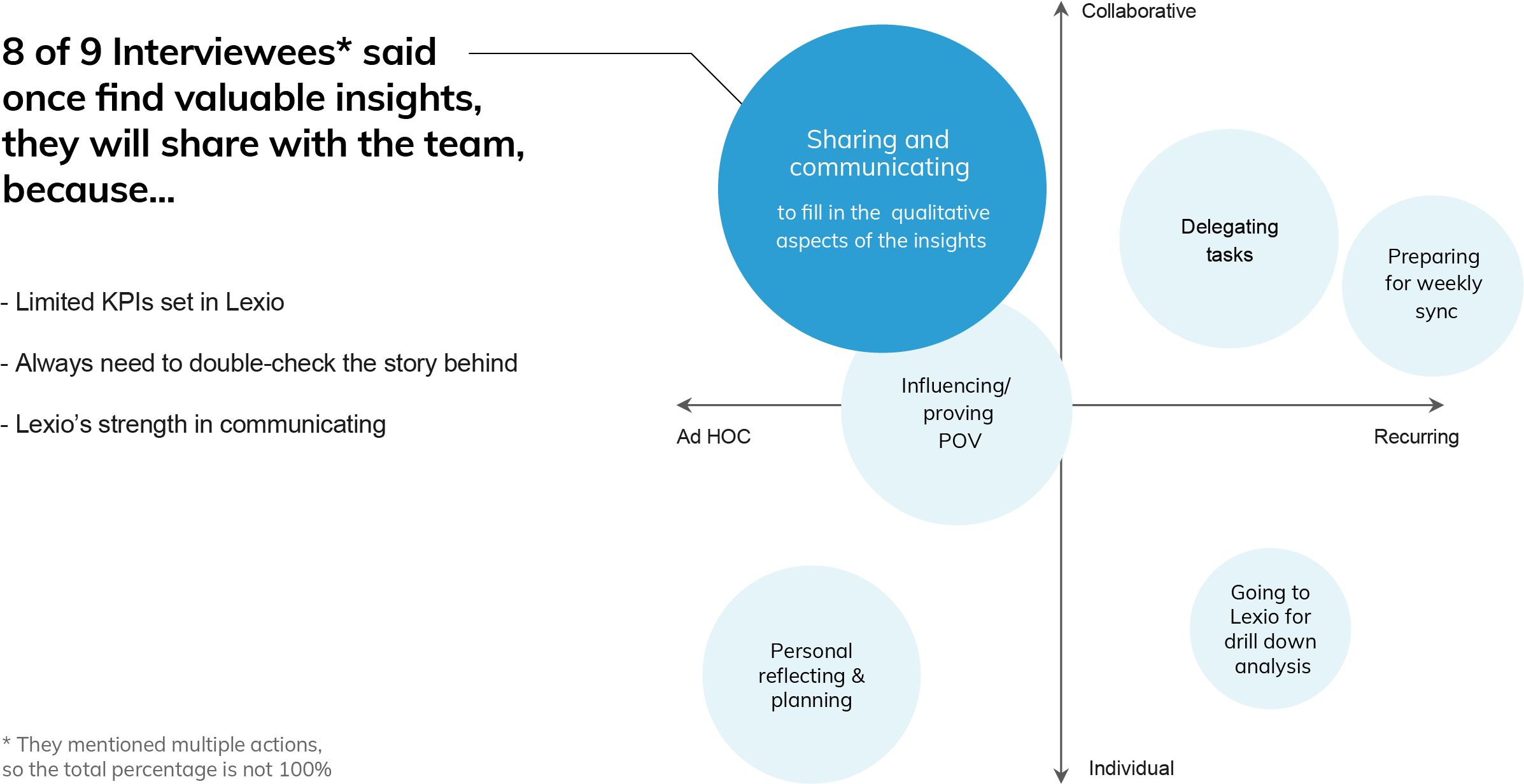
Sharing and commenting became the next milestone.
Make Lexio actionable
Sharing, as the main way of acting on Lexio's insights, provides a
lot of value to the user and the team.
Trigger users back
Commenting can help people engage with our product, increase
retention, and help with organic growth.
Increase reliability
Quantitative data always has its limits, people's comments can
reveal the story behind the scene.
Research
Understand the current way of sharing Lexio insights in the context of
their daily workflow.
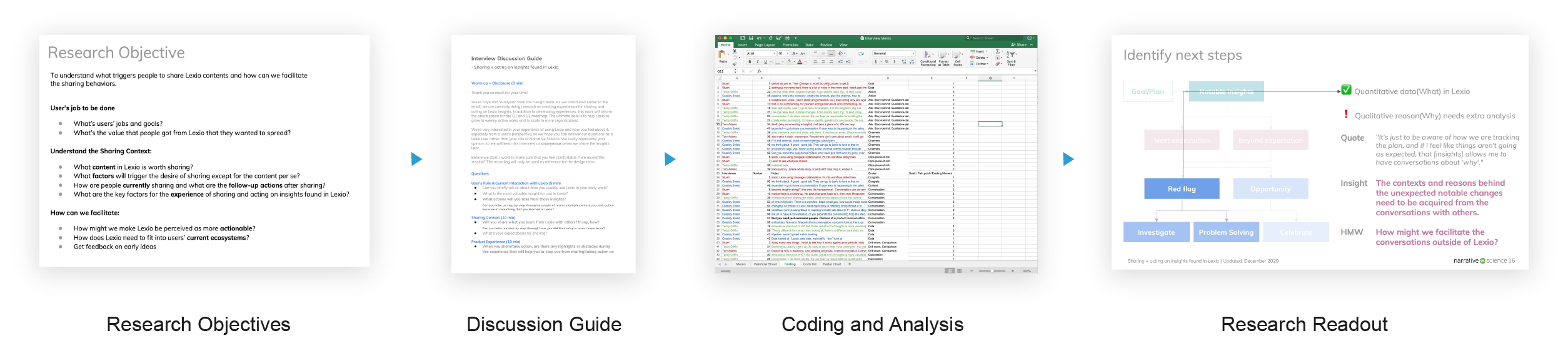
We talked to 9 users of Lexio, The user sample includes team managers,
sales representatives, and marketing experts, given the existing active
users. we asked them questions from generally how they are using Lexio,
what drives them to share, to what content and how do they share.
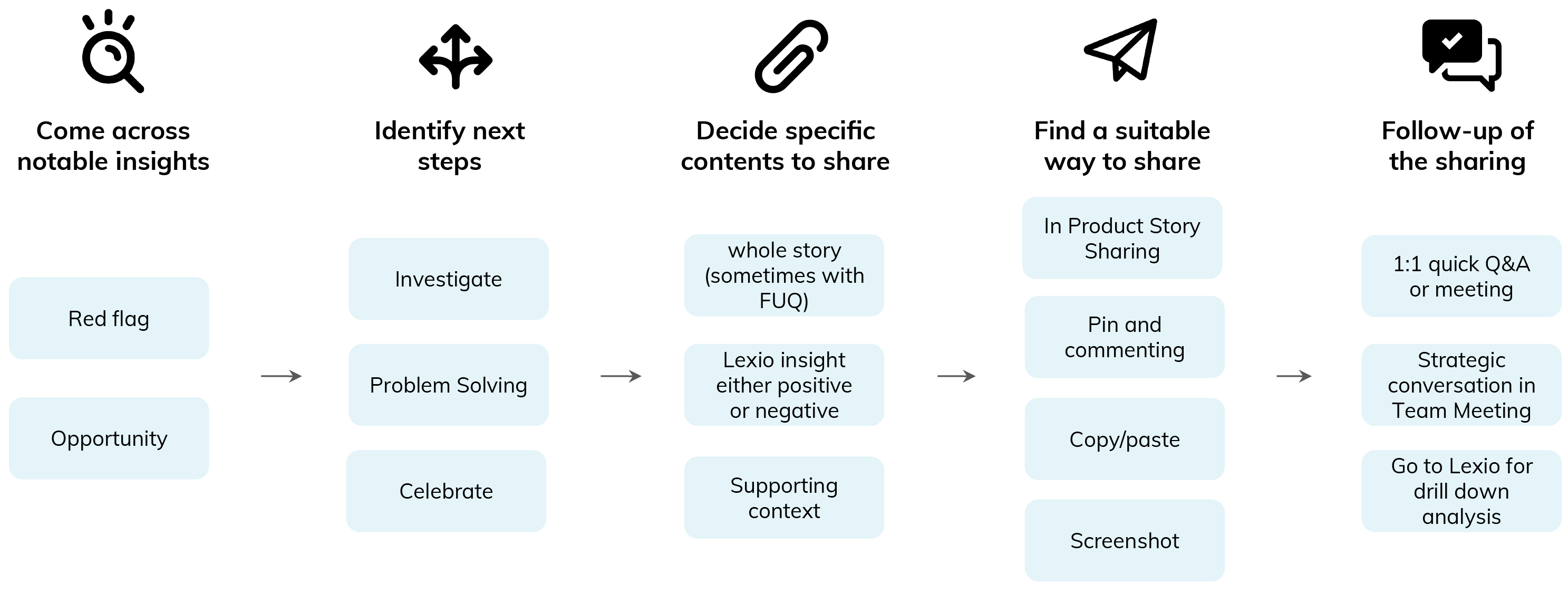
I analyzed and synthesized the research data, from which we (1)
understood deeply what users wanted to achieve with our product. (2) had
an overview of the current sharing experience and understood the pain
points. (3) tested a few concepts.
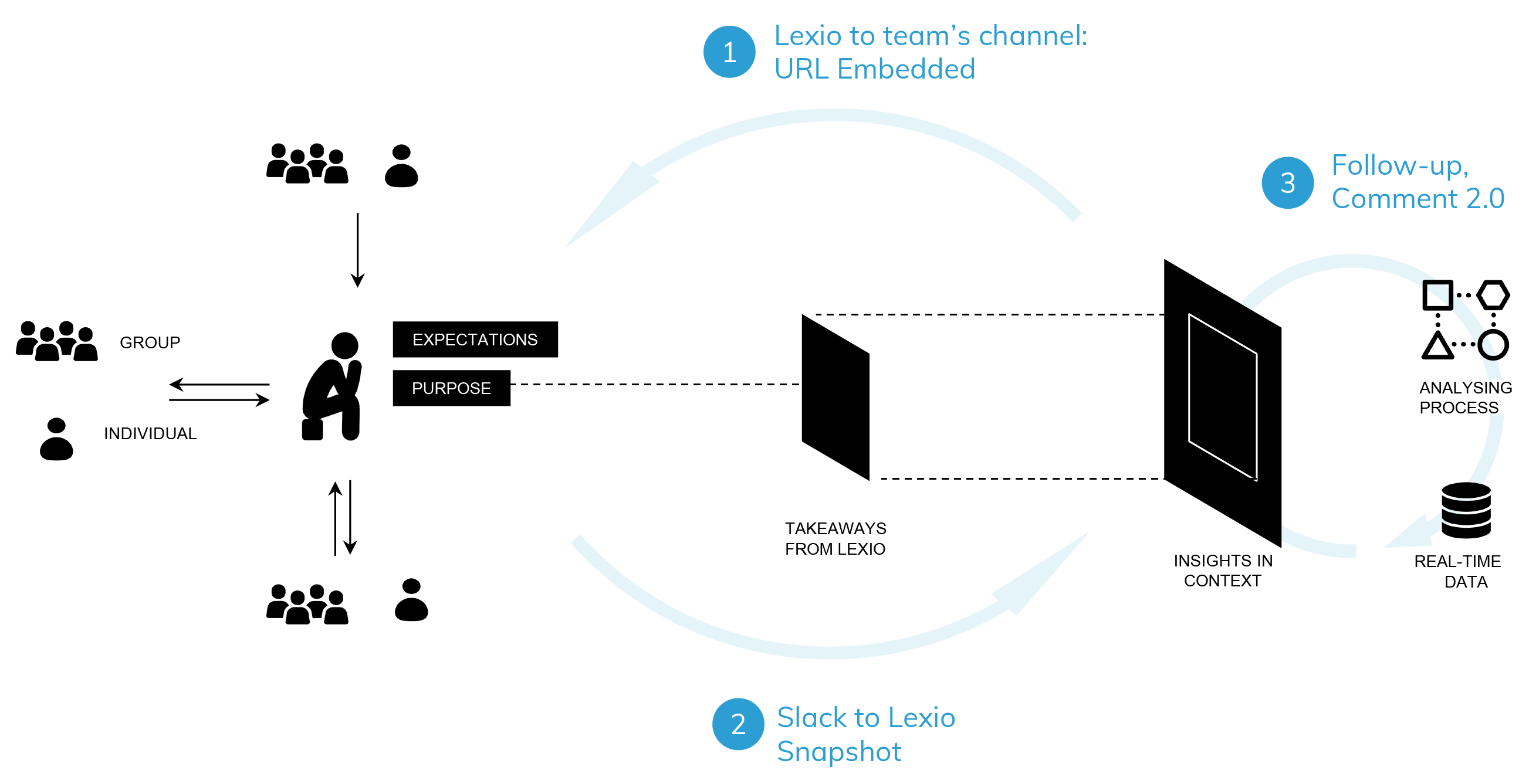
The ideal sharing experience that our user is looking for.
Conversation Facilitation
Facilitate the right types of conversations users want to have with
others based on Lexio’s insights
Seamlessness
Seamless transition from Lexio to other communication channels by
integrating different channels with flexibility
Action-driven
Help users know what actions they can take for the shared contents
they received
Accuracy
Accurate data(the original version rather than real-time changed
version) and time standpoint for the shared contents
Traceability
Traceable conversations and transparent analysis path for the
sharing story
Design Challenge
How might we help teams seamlessly and accurately share Lexio insights
and have successful conversations?
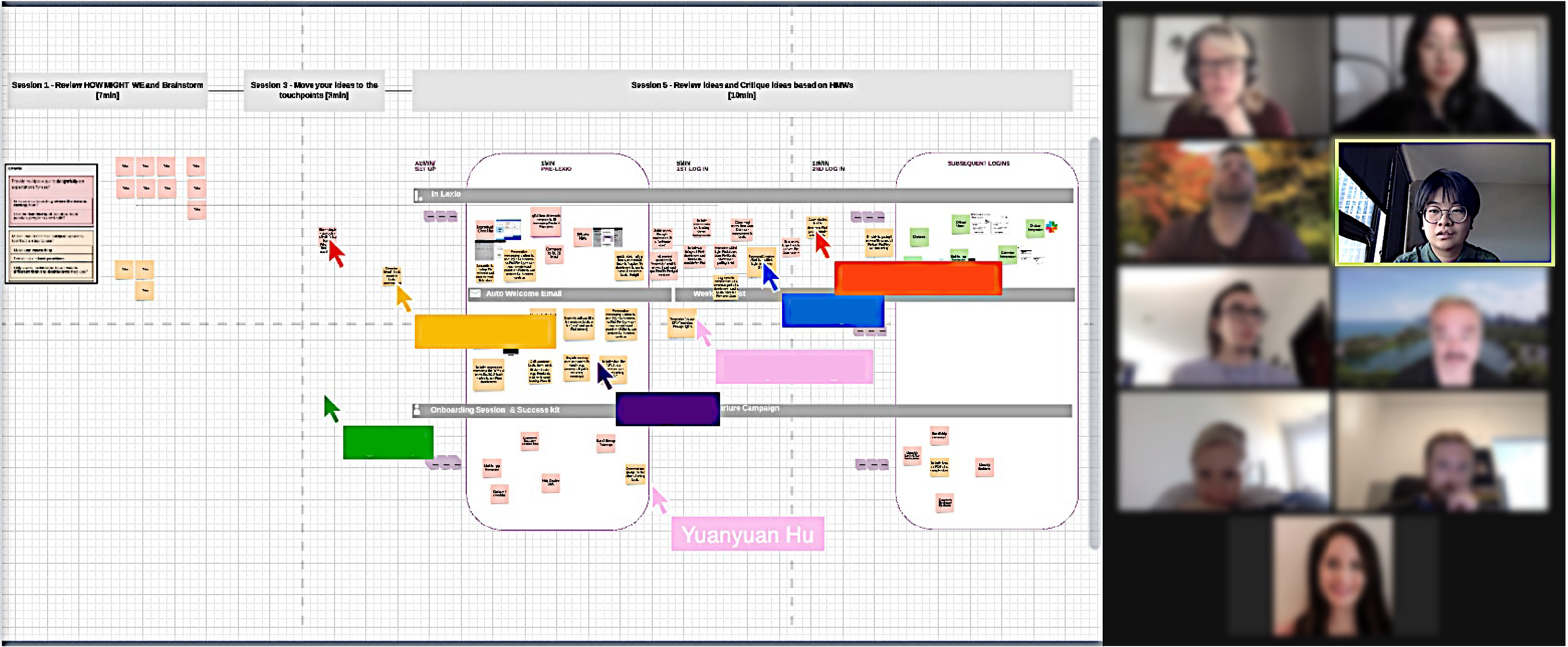
After the research readout, I planned and hosted a brainstorming section
with the whole product team. I framed research insights into
solution-oriented HMWs. Rather than just listing the HMWs, I put them
into wireframe-like boxes to make them connected and tangible. That
helped our participants to digest a lot of information, and use that for
brainstorming. After participants run out of their initial idea, I let
them move ideas to the journey, so they can see which ideas come
together, and build upon each other's ideas. Here is just an overview of
our design principles.
Let's be Human-centric
Will this idea solve the user’s problems?
We went a little bit broad beyond sharing and commenting and got a
lot of ideas about the collaboration function. I captured and
synthesized all these ideas and started designing for them.
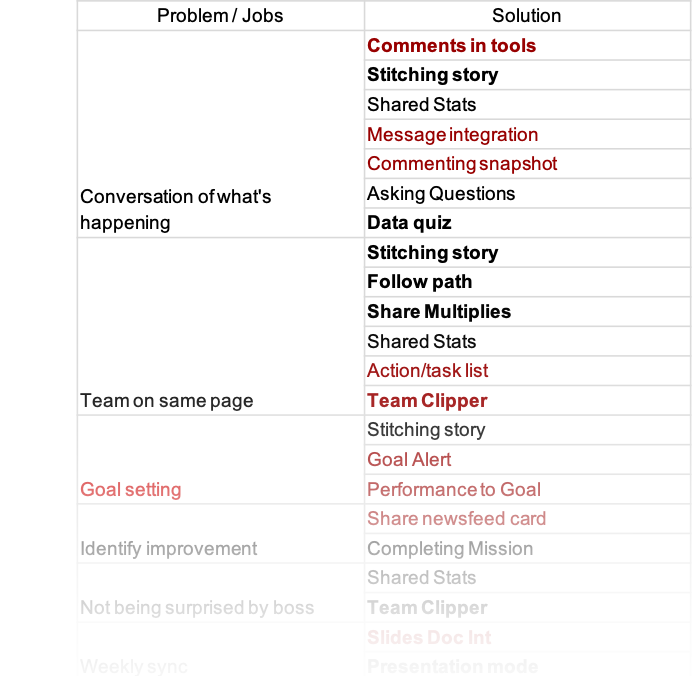
How do we prioritize these features? I connected with PMs, heads of
design, and CPO. We all agreed that rather than find the smallest
cost/value. Proving our value as a product is the top priority.
Therefore, I sorted all the ideas according to the problem it's
trying to solve and highlighted the one that solves the problem that
the user cares about the most.
Solution
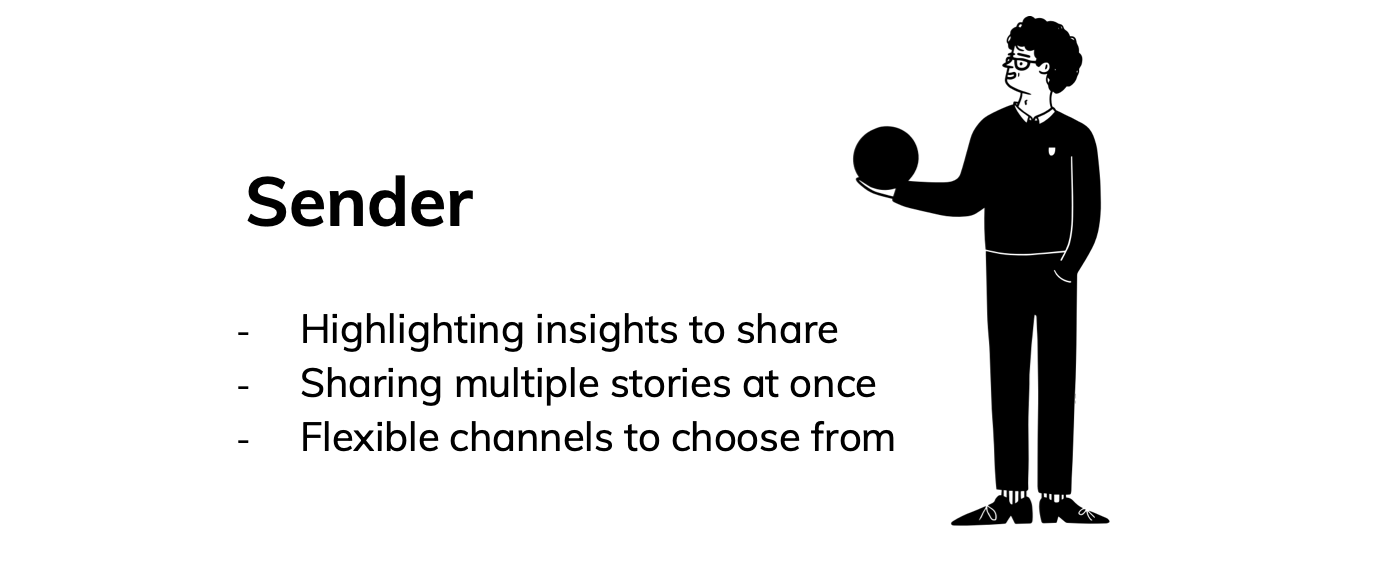
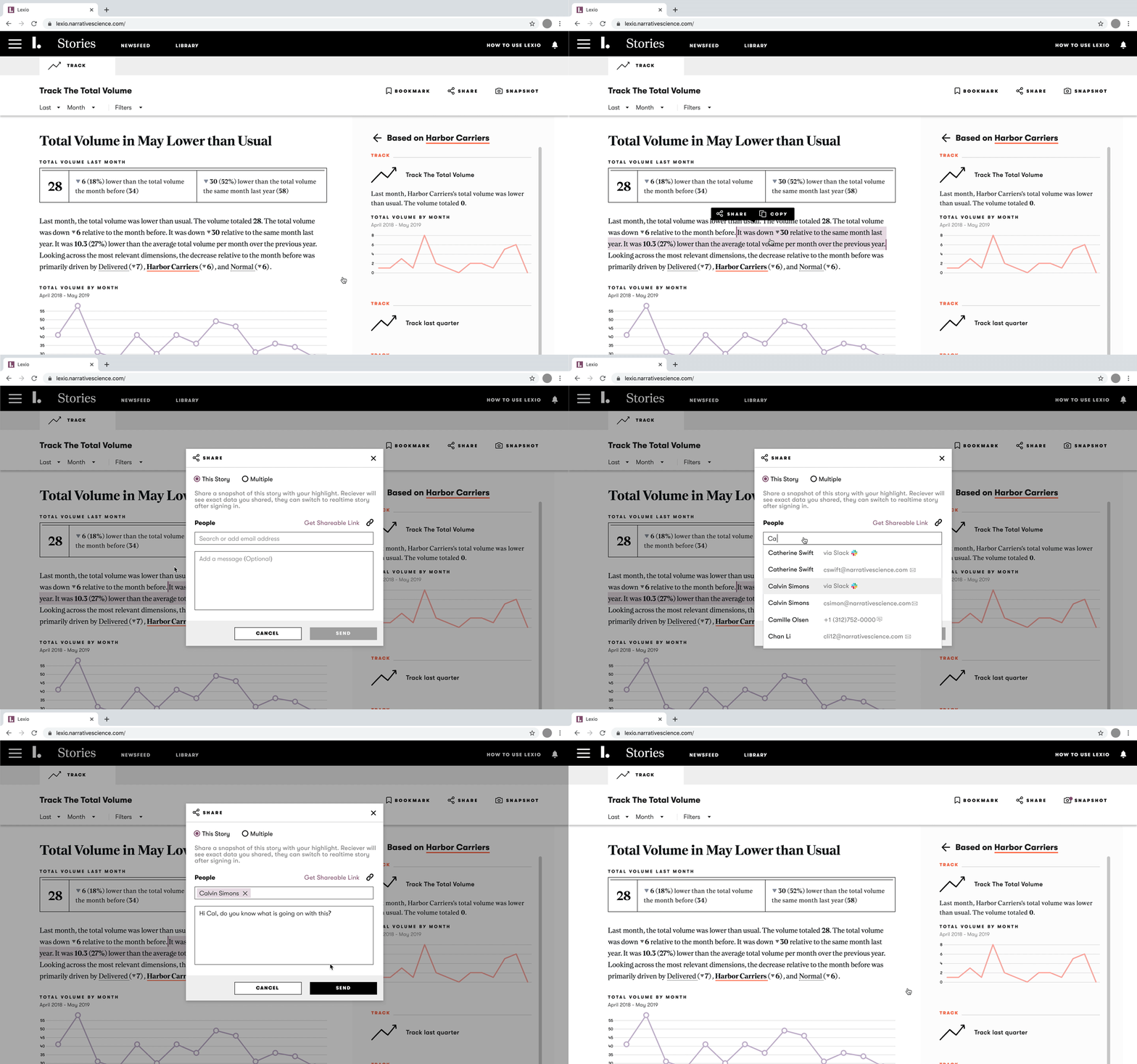
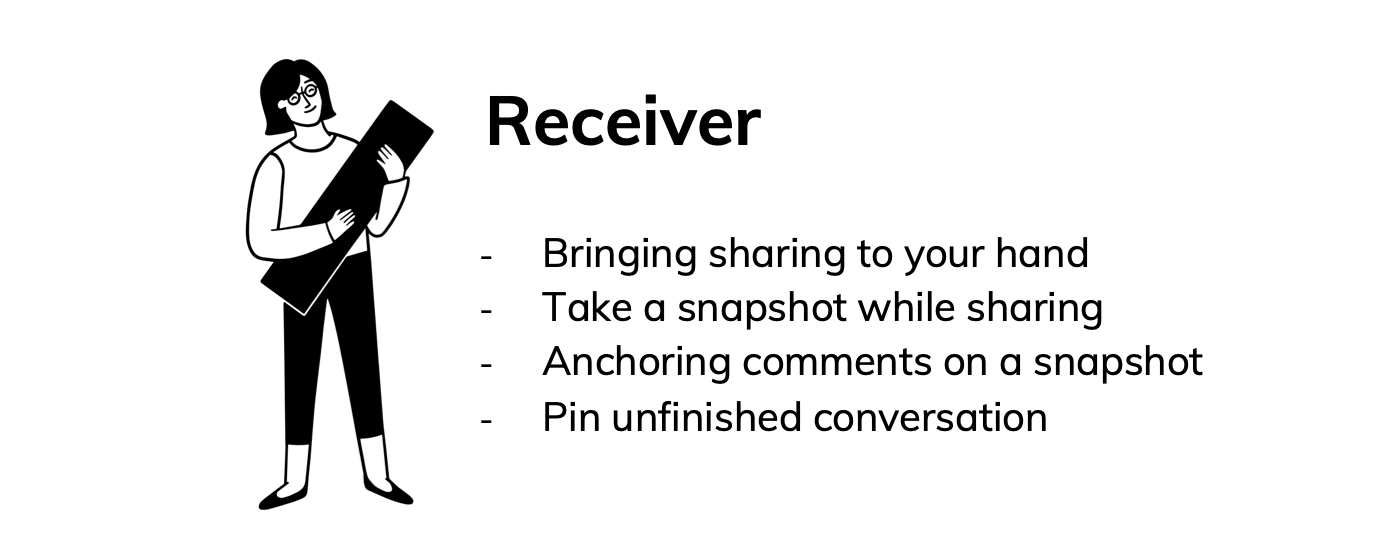
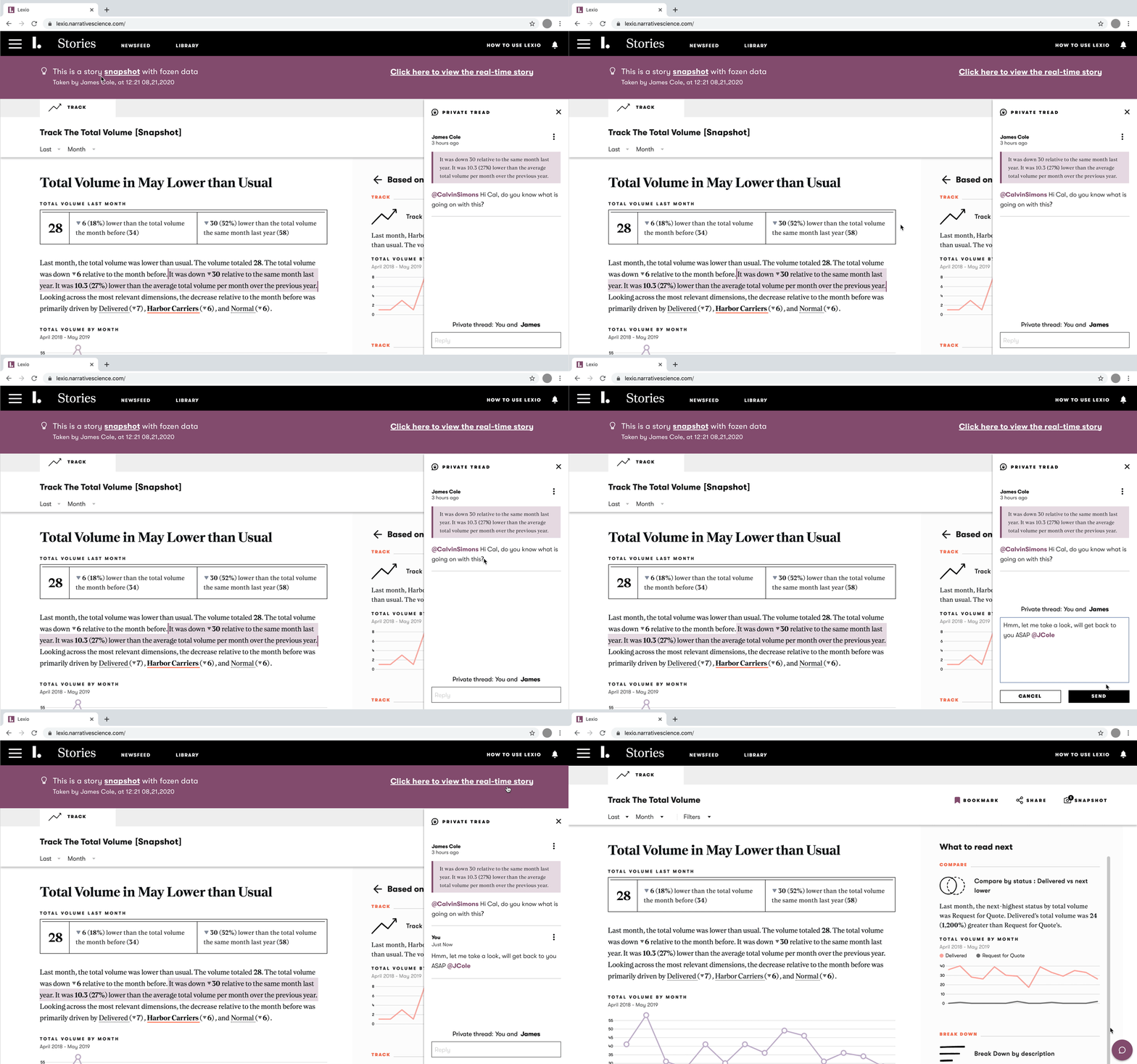
Not MVP but a simple, completed, lovable experience for both "sender"
and "receiver"